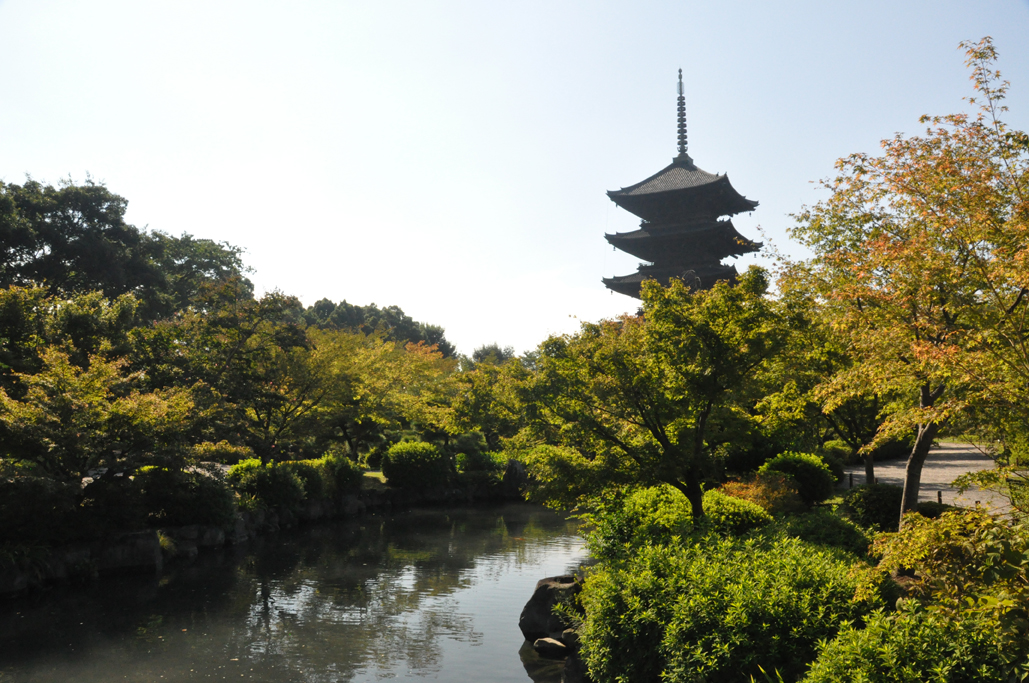
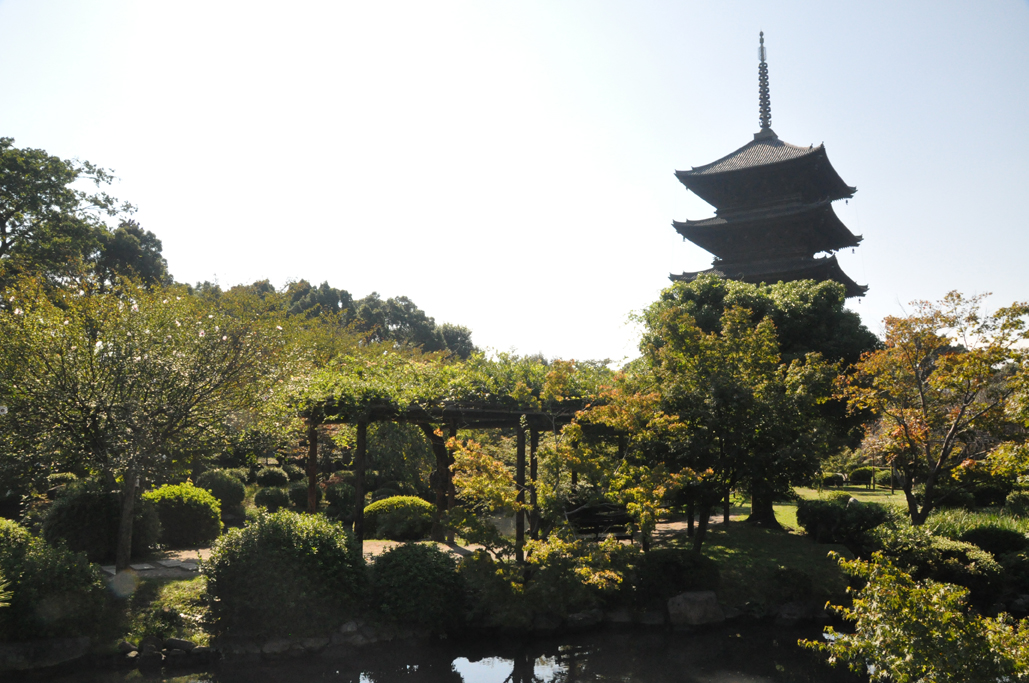
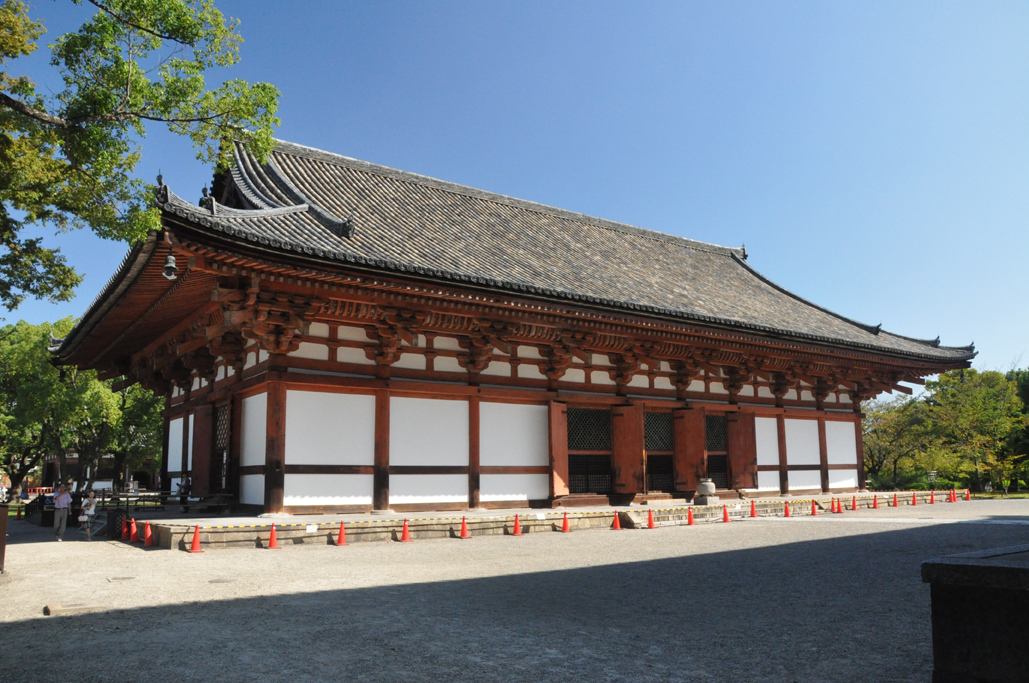
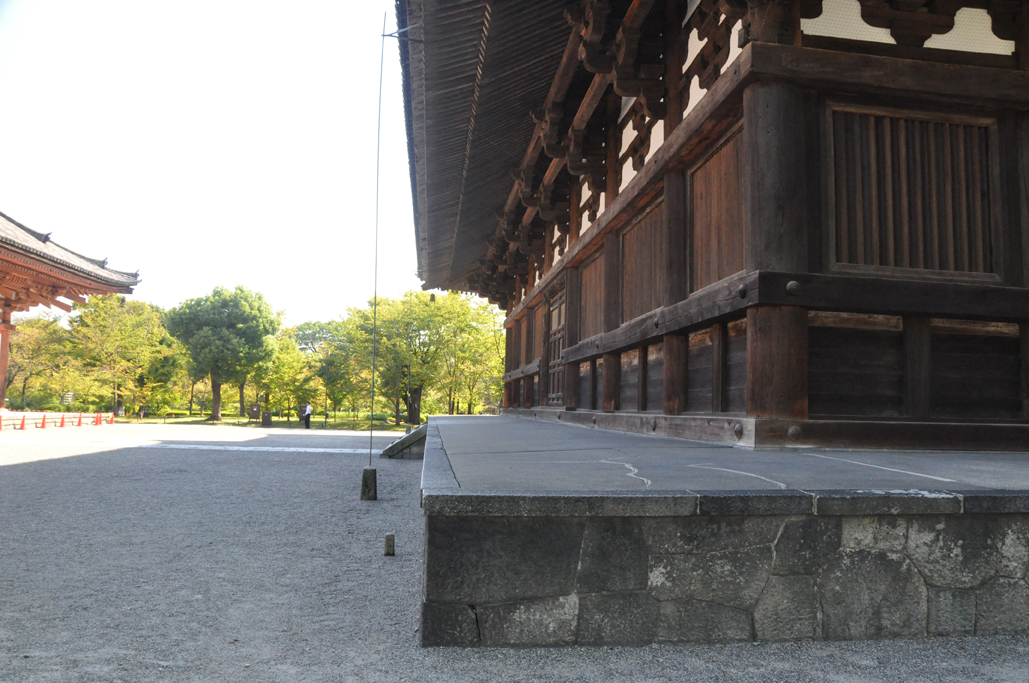
 Along with Sai-ji Temple (West Temple), which burnt twice and wasn't rebuilt, To-ji Temple (East Temple) was part of the entrance to the Heian imperial capitol. The two temples stood on either side of the Rashomon Gate. To-ji's formal name is Kyo-o-gokoku-ji, which translates The Temple of the Defense of the Nation through the King of Doctrines.
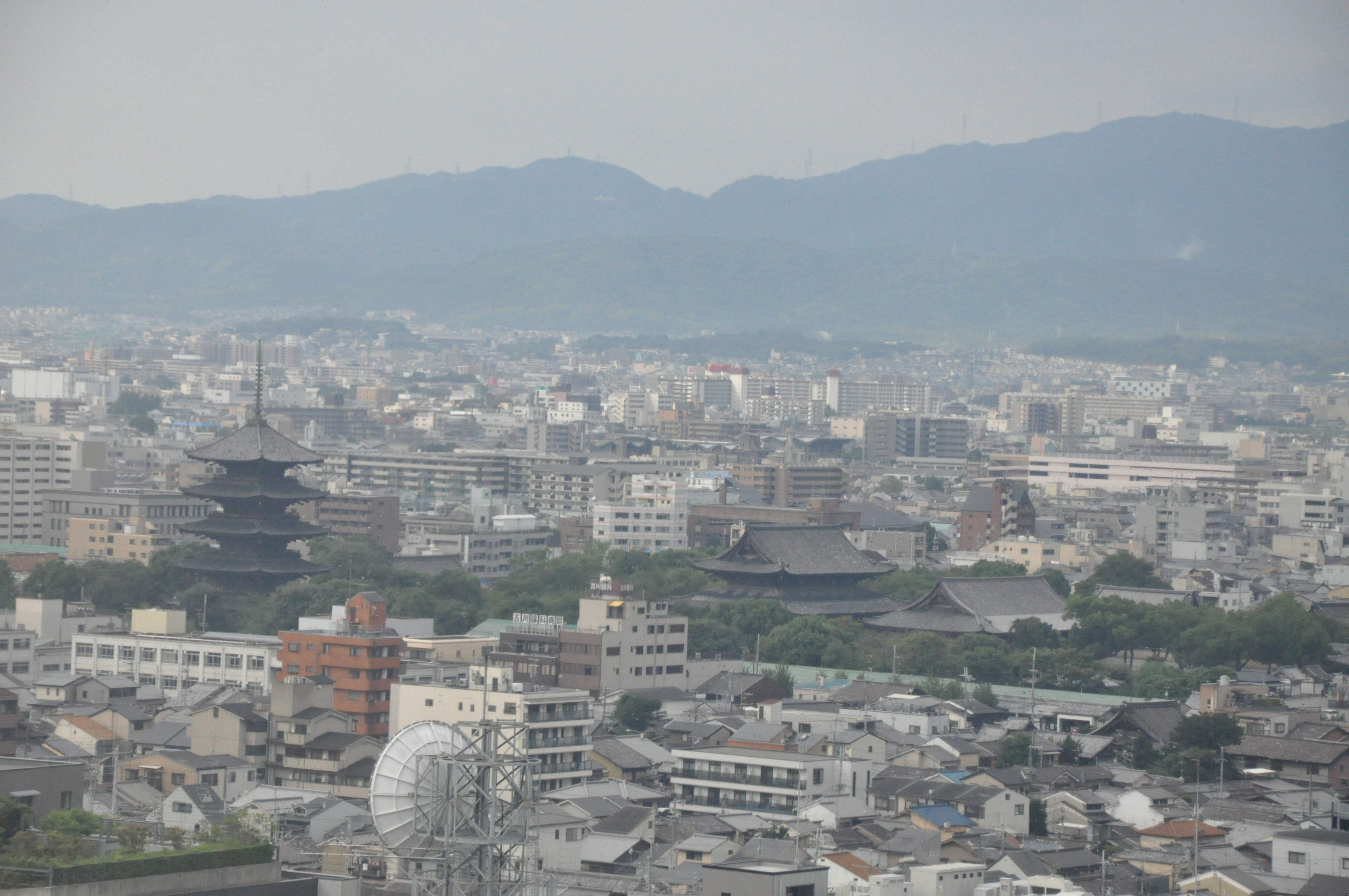
The imperial capitol was moved from Nara to what would become Kyoto because of the belief that powerful Buddhist priests had too much influence over the imperial court. As a result, To-ji and Sai-ji were the only temples which the Emperor Kammu allowed built in the Heian capitol. To-ji was built in 796AD, in part to guard the city. To-ji is located southwest of the JR Kyoto station, within easy walking distance. Its five story pagoda is a symbol of the city, and easily seen from the passing Shinkansen.
 About thirty years after its construction, Emperor Saga entrusted the temple to Kobo Daishi (Kukai) in 823. As Kukai had been the founder of Shingon Buddhism in Japan, To-ji thus became established as a Shingon temple and remains so to this day.
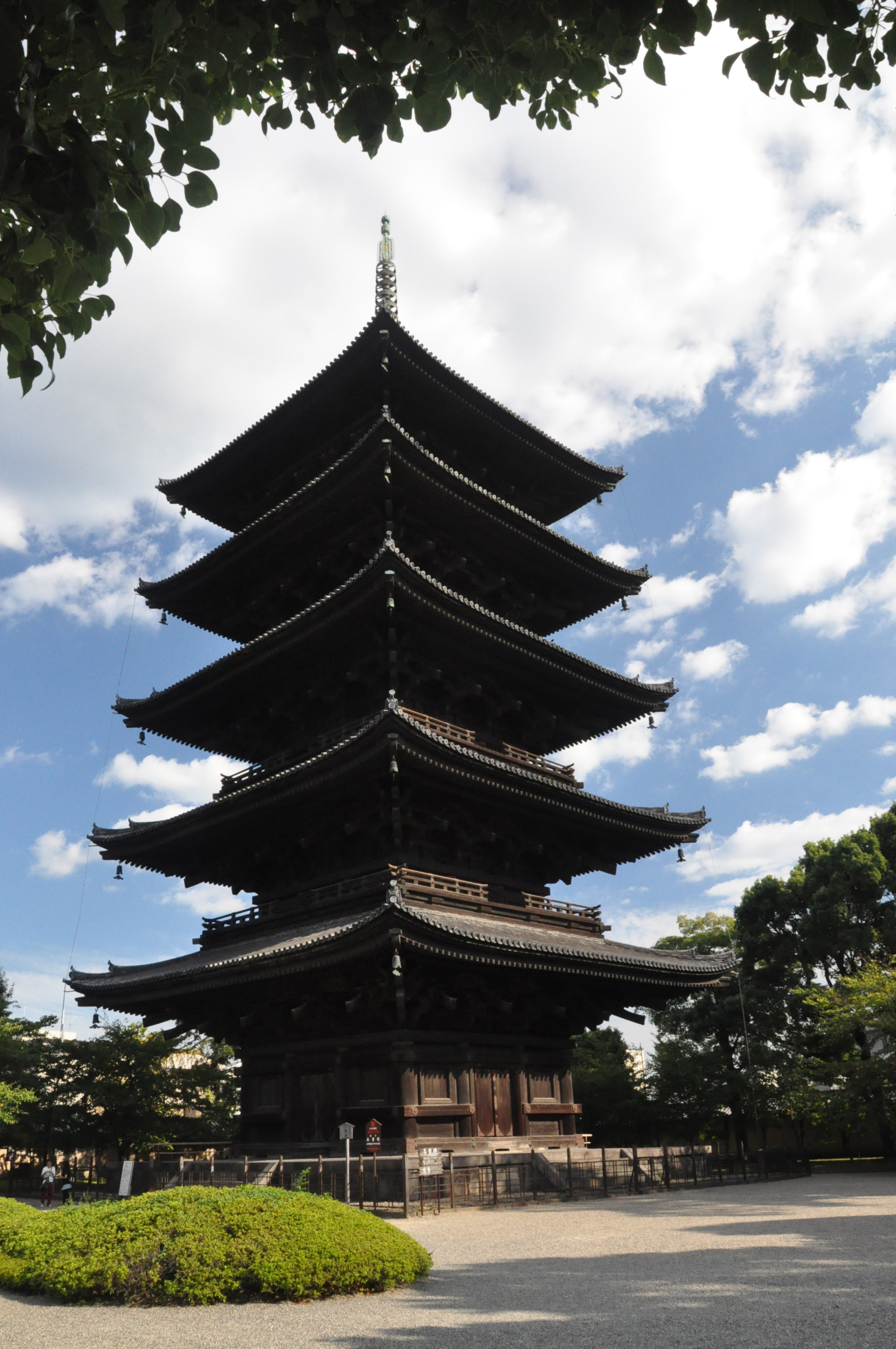
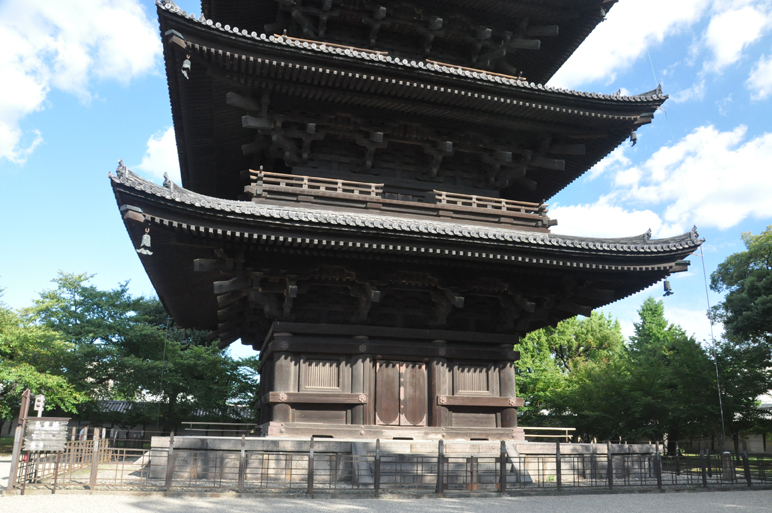
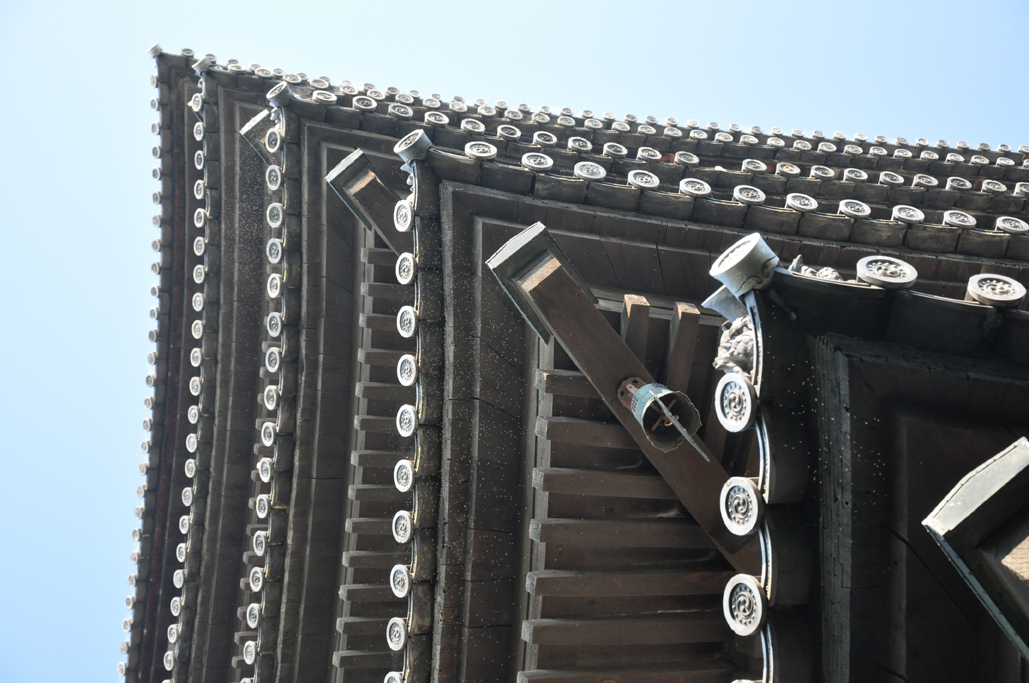
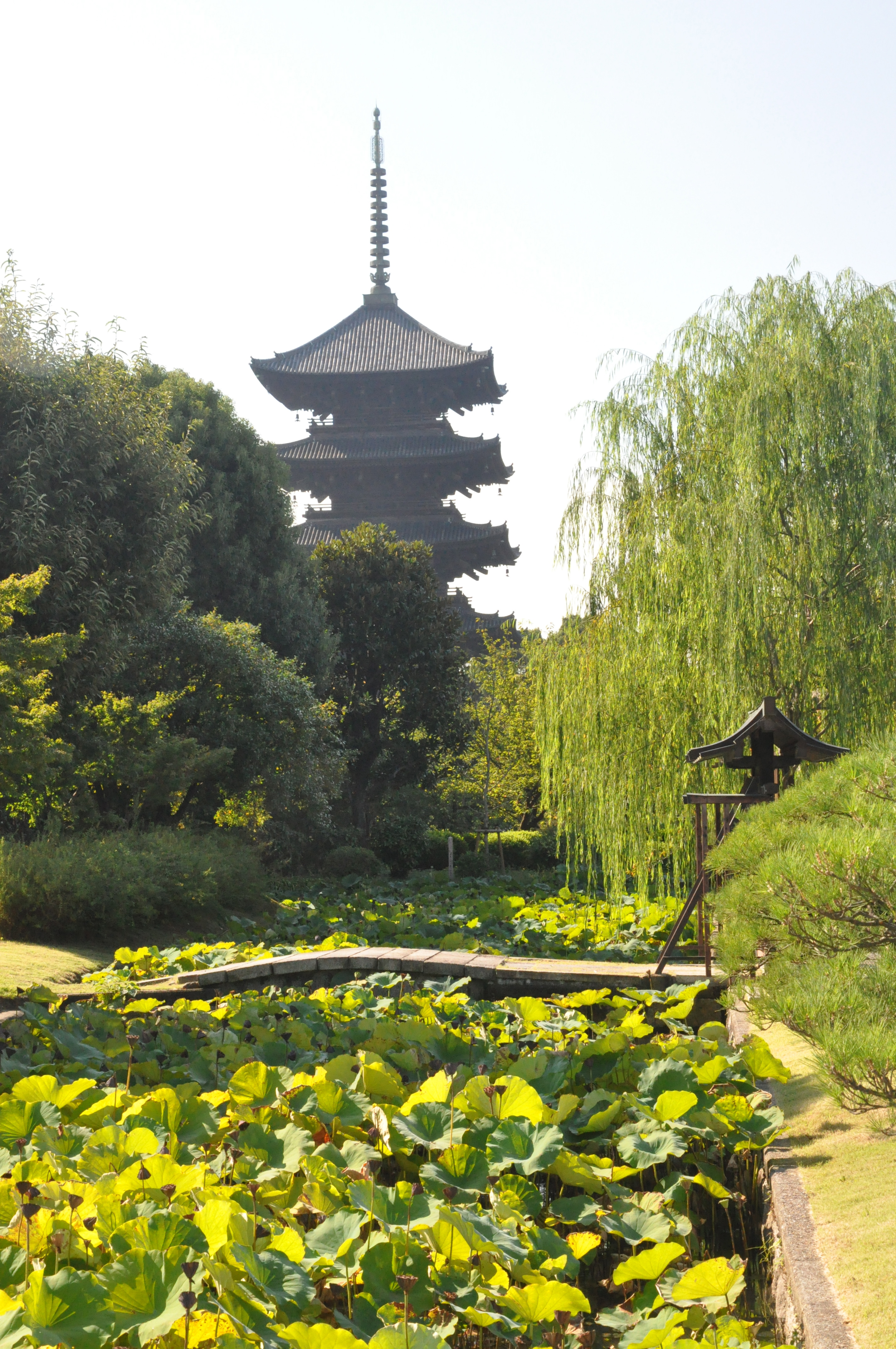
Toji's five storey pagoda stands 180 feet tall, and is the tallest wooden tower in Japan. Originally built by Kukai 826, the current structure dates from the Edo period (1695). The ground floor contains four Buddha statues which are not displayed at predictable times.
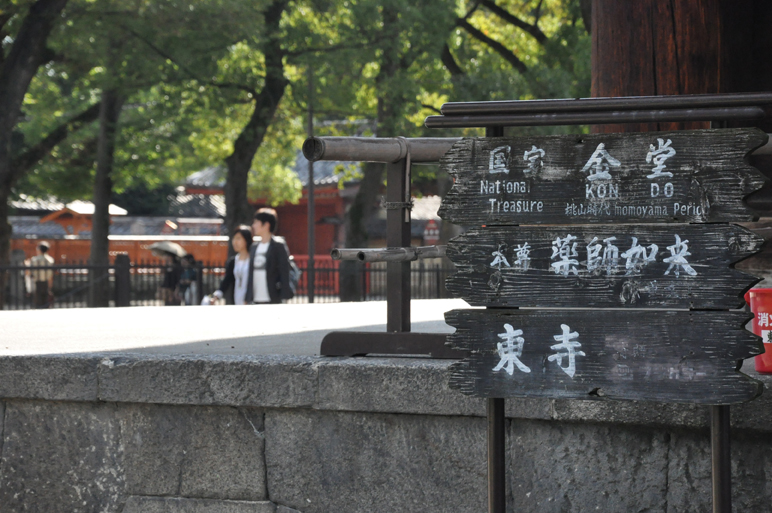
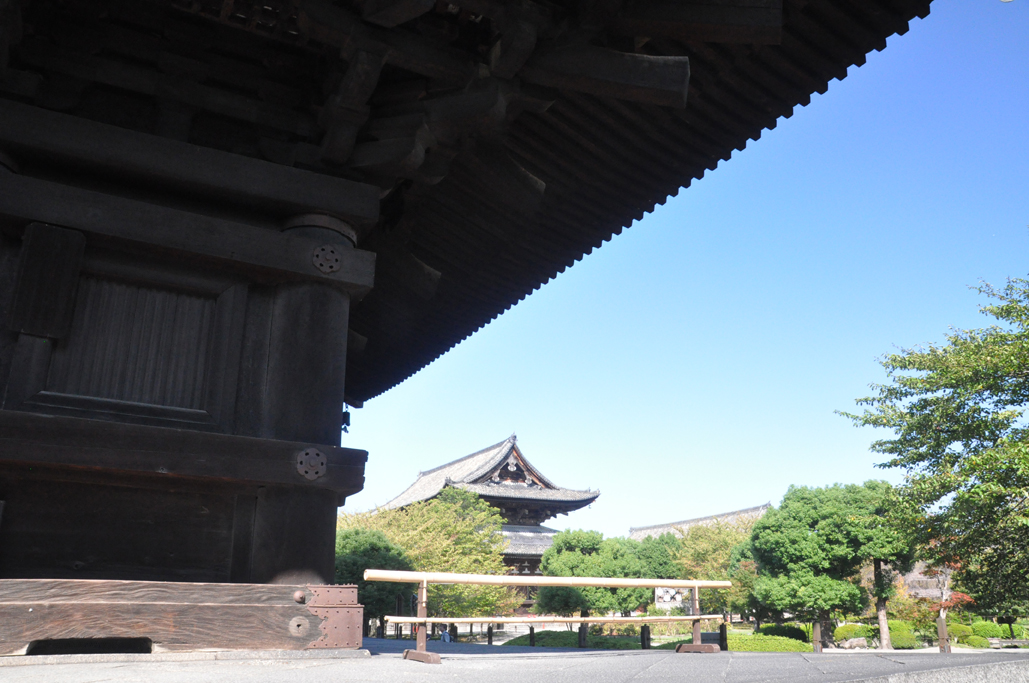
Considered a national treasure, To-ji's Kondo hall is the largest building within the temple complex. Like the pagoda, it was destroyed by fire and rebuilt during the Edo period. It is rectangular shaped, dark brown, with wood louvered paneling. Because of the risk of fire, it is common to stacks ofred water buckets around the complex. The Kondo houses a large statue of Yakushi Buddha venerated for its healing powers. It is flanked on each side by the Nikko and Gakko Bosatsus.
The temple's Kodo or lecture hall stands next door to the Kondo and was originally built byKobo Daishi in 825. It burned down in the same fire which destroyed the Kondo, but was built in its original style rather than the Edo style. In the photos on this page it is rectangular with white panels and red trim. It is well known that Shingon Buddhism relies on visualization of deities as part of its religious practice, and that the Kongo-kai and Taizo-kai Mandalas are the best examples of this. Another remarkable feature of To-ji is that the Kodo houses nineteen statues brought by Kobo Daishi from China which are assembled as a three-dimensional mandala with Dainichi Buddha in the center. This cosmic Buddha is surrounded by multiple bosatsus and fierce guardians.
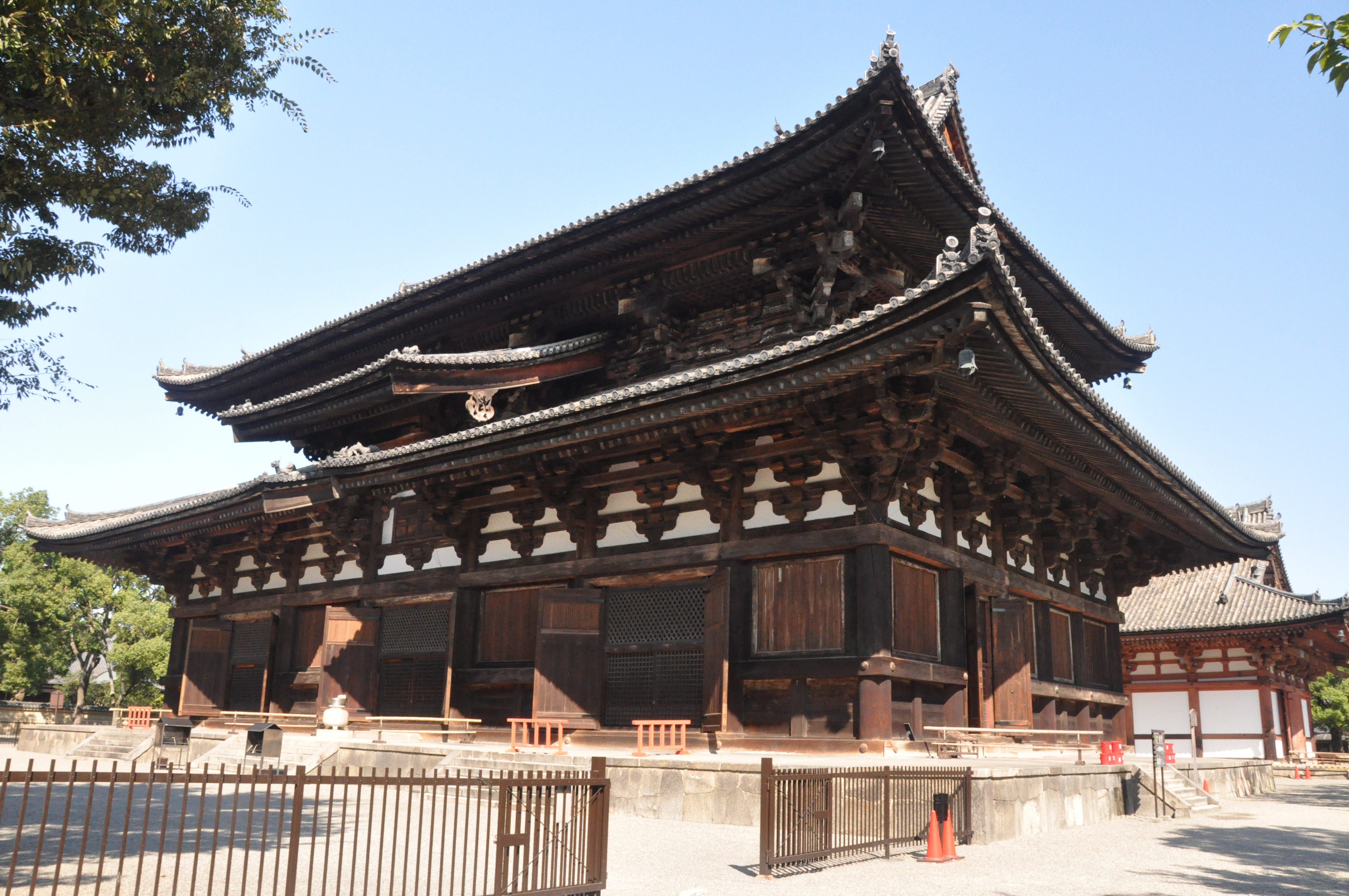 To-ji was established as a UNESCO World Heritage Site in 1994. As viewed from the train or the roof of train station it is hard to imagine either its original presence in the city or what an oasis it represents today. Standing anywhere within the temple precincts gives a person the sense of being in a different era or even dimension. Even with the modern buildings which are part of the complex today a person senses that every building and its arrangement has a purpose.